Environmental Conservation and Restoration
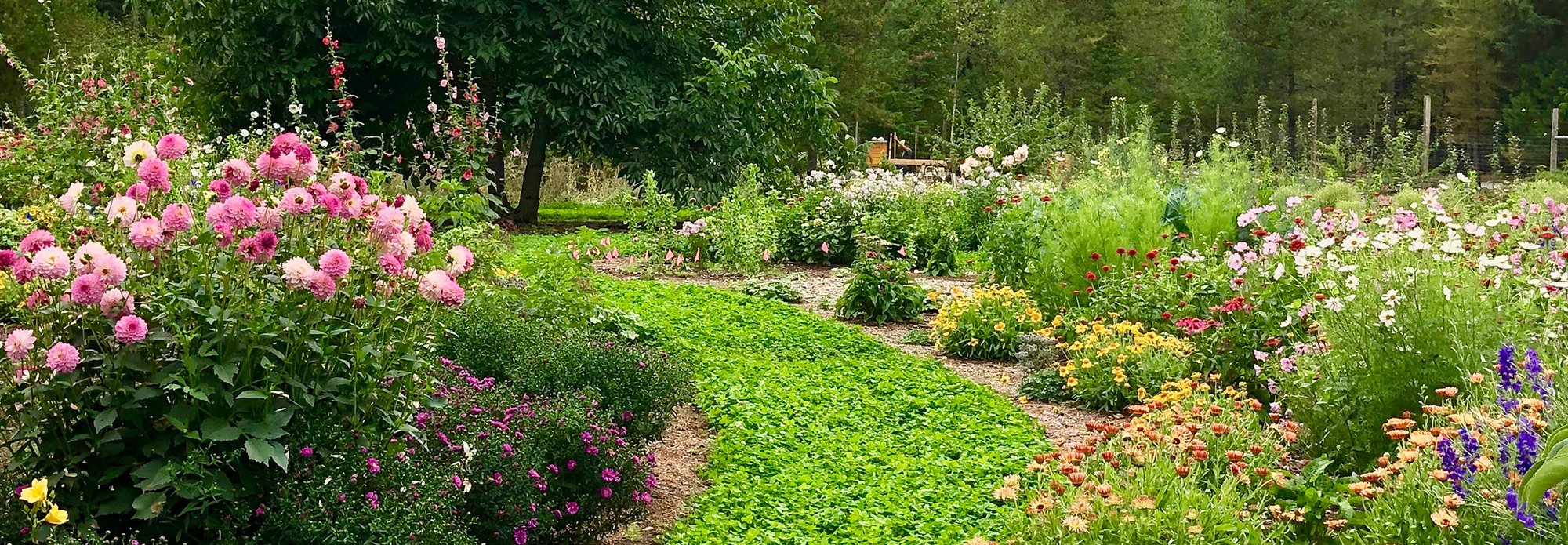
Little Slocan River Riparian Restoration & Enhancement Education Site
ERC’s location at the confluence of the Slocan River and Little Slocan River is a unique and ecologically important wildlife corridor. ERC seeks to protect and restore the land in which we are privileged to operate on and steward in Sinixt təmxʷúlaʔxʷ.
This project has been in motion since 2020, and its goals include restoration of the riparian zones at ERC while also creating an outdoor, hands-on classroom at Elk Root Conservation Farm to share information and education with respect to the importance of being responsible ecological stewards of riparian zones on private lands.

Pollinator Highway Project
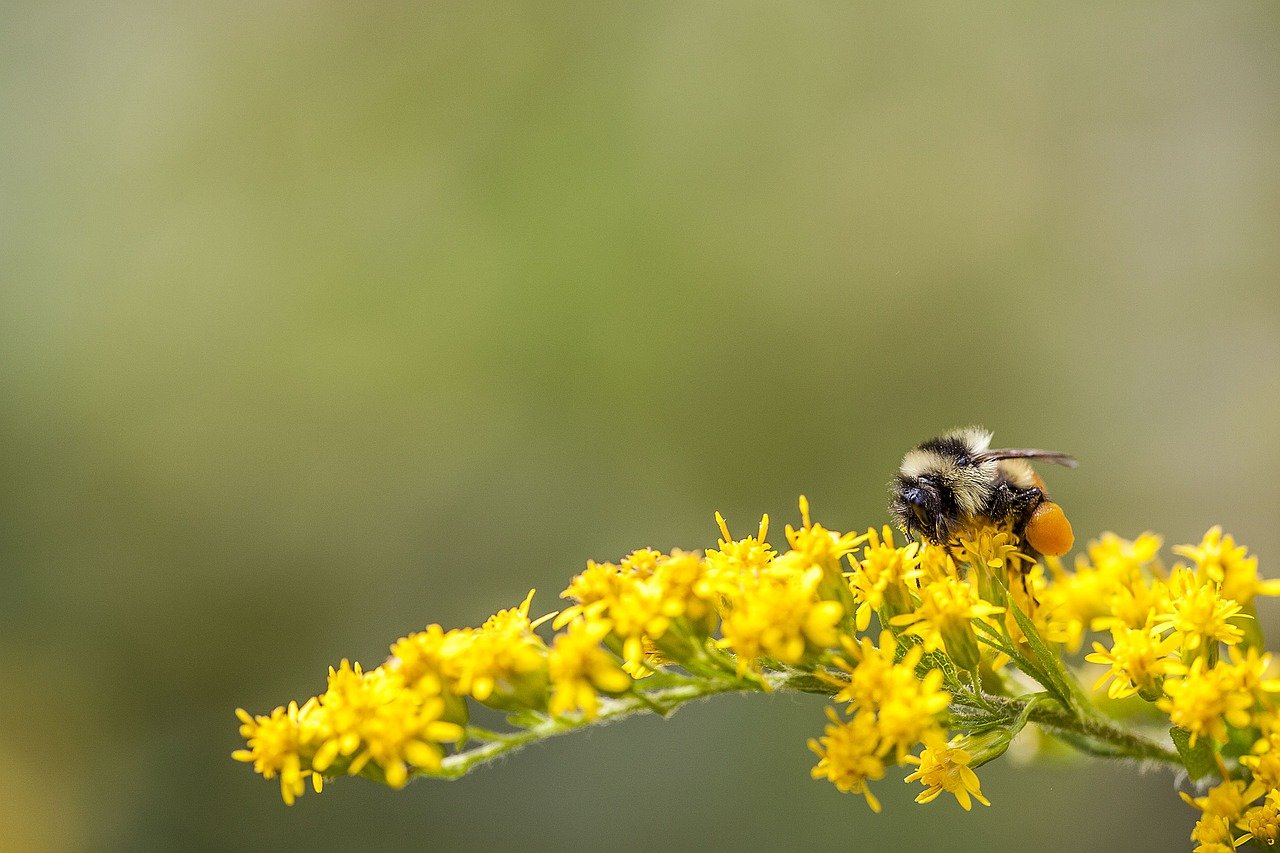
The Pollinator Highway project in the Slocan Valley will establish and connect crucial pollinator habitats to support the health and movement of pollinator species pollinator habitat connectivity, addressing the urgent need to protect pollinator populations, such as monarch butterflies and wild bumblebees, which have seen dramatic declines due to habitat loss and climate change.
This initiative aims to establish and connect crucial pollinator habitats to support the health and movement of pollinator species, such as monarch butterflies and wild bumblebees, which are vital to ecosystem stability.
Biodiversity Catchment Pond
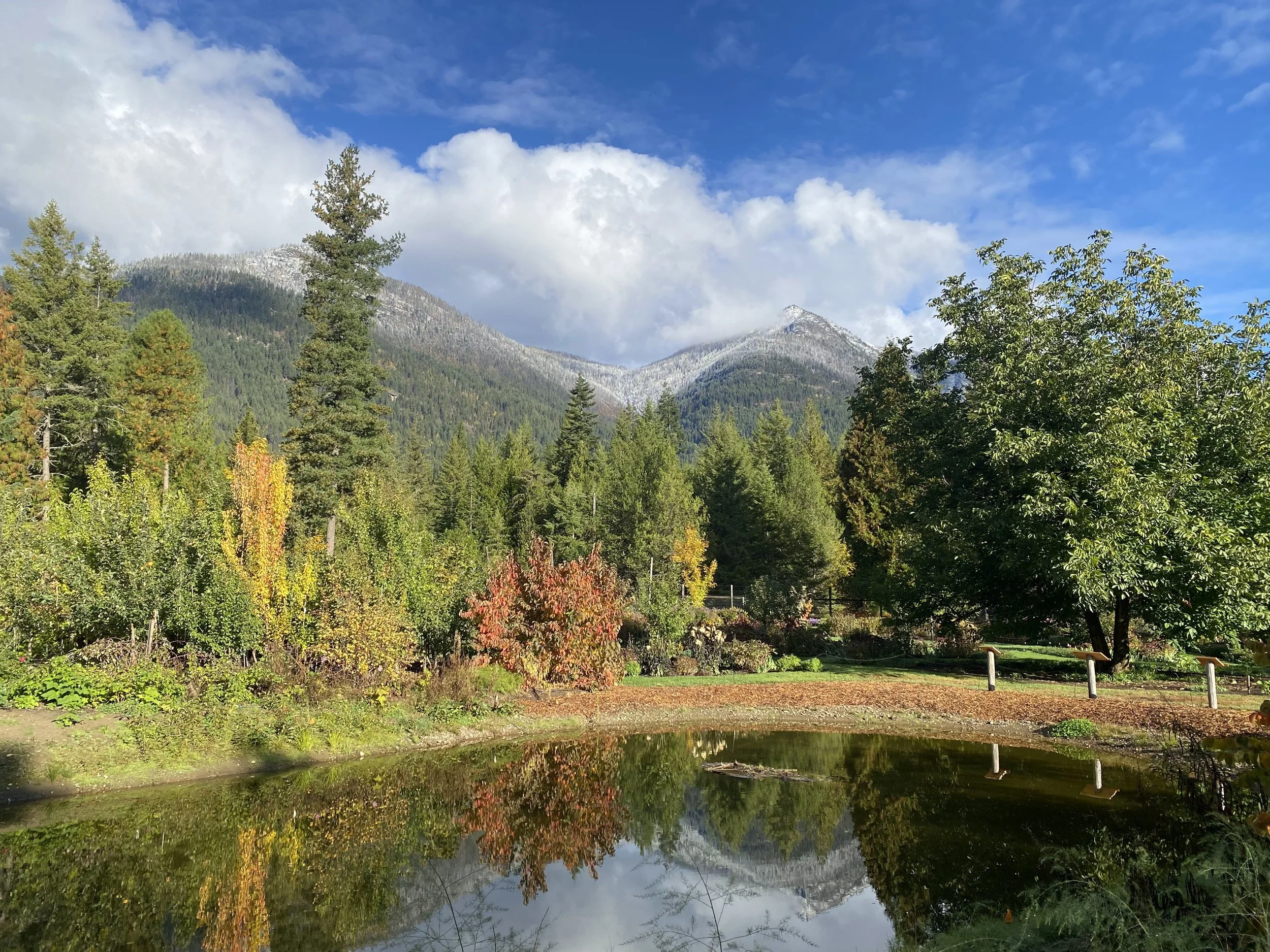
ERC constructed its Plastic-Free Biodiversity Catchment Pond in 2024. Designed to serve multiple functions, the pond acts as an emergency water supply for the farm, promotes biodiversity, and supports native species by recreating wetland conditions. Extensive research was undertaken to enable the pond to retain water without plastic liners. Instead, it relies on self-sealing bentonite clay to prevent leaks and cracks, along with carefully engineered dimensions of rock and compaction grades.
In just one year, this project has already shown the benefits of thoughtfully restored habitats. Over the summer our team observed dozens of dragonflies and aquatic insects using the pond for basking, hunting, breeding, and shelter. Juvenile robins have used the pond to bathe and drink, and a western toad visited to lay their eggs! We were lucky enough to watch as these eggs went from tadpole to toadlet over the course of the summer.
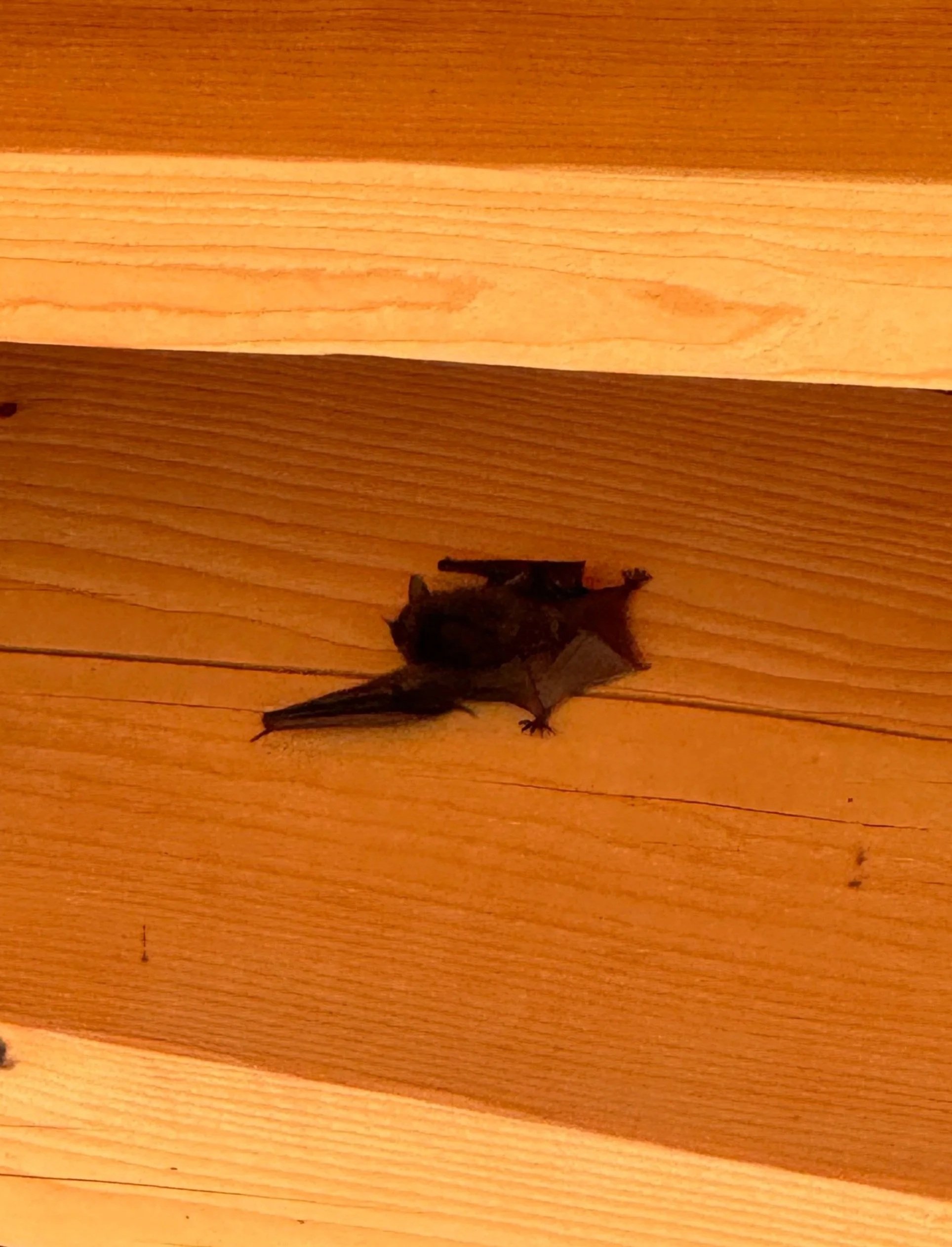
Bat Condo
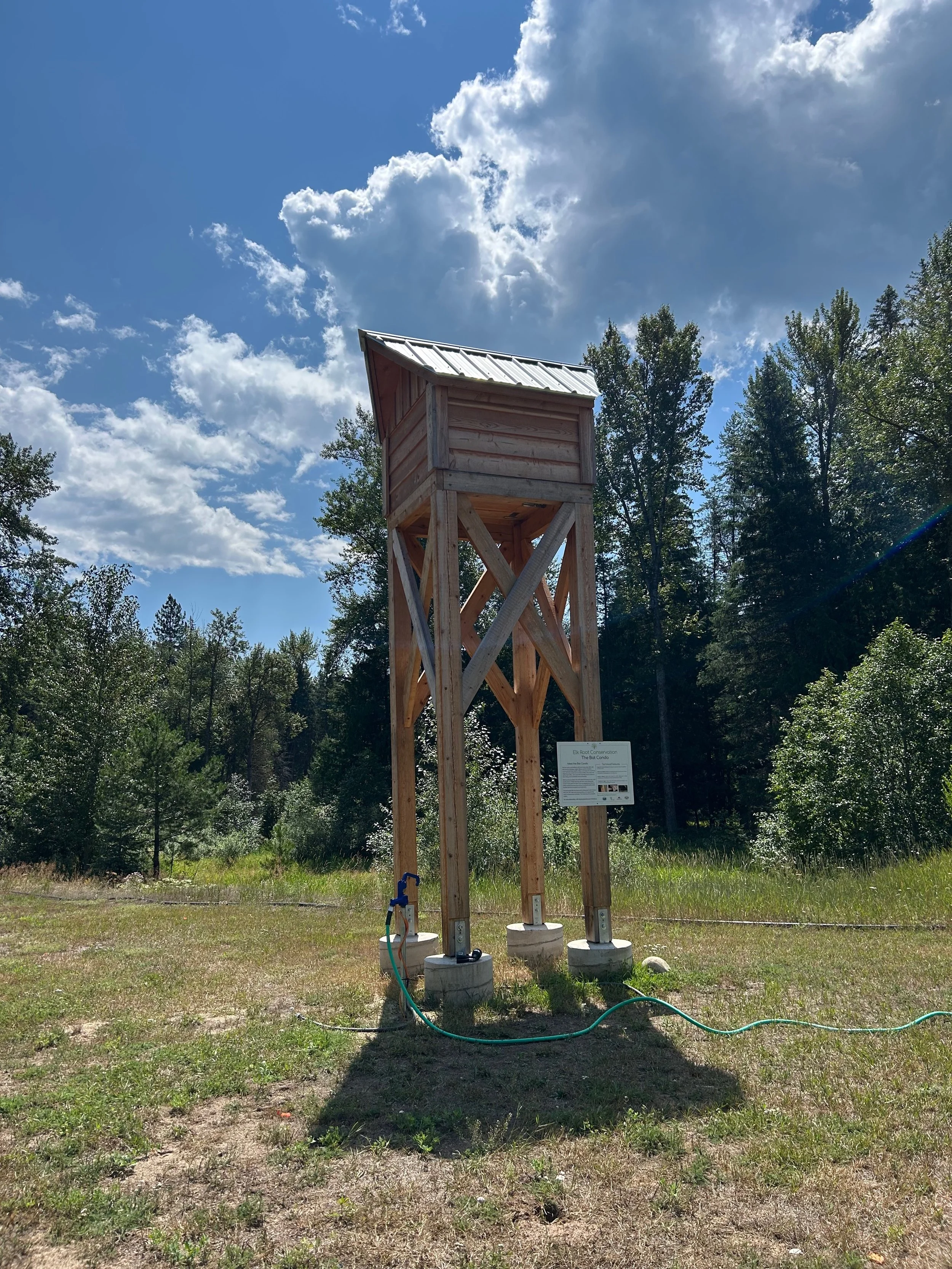
In fall 2024 a bat condo was installed at our Educational Demonstration Farm with help from the Kootenay Community Bat Project (KCBP) and Okanagan Nation Alliance (ONA). It offers a new home for a local bat colony that was moved out of a nearby building. The condo was built using solid untreated wood to make it a safe, strong, and comfortable home for the bats.
With lots of rooms inside, the condo gives bats space to rest, roost, and fly around. It helps bats stay safe since many natural and human-made places for them to live are disappearing.
Bats are really important because they eat lots of insects, which benefits both local ecosystems and agriculture.
BrandenBark™ and Habitat Trees
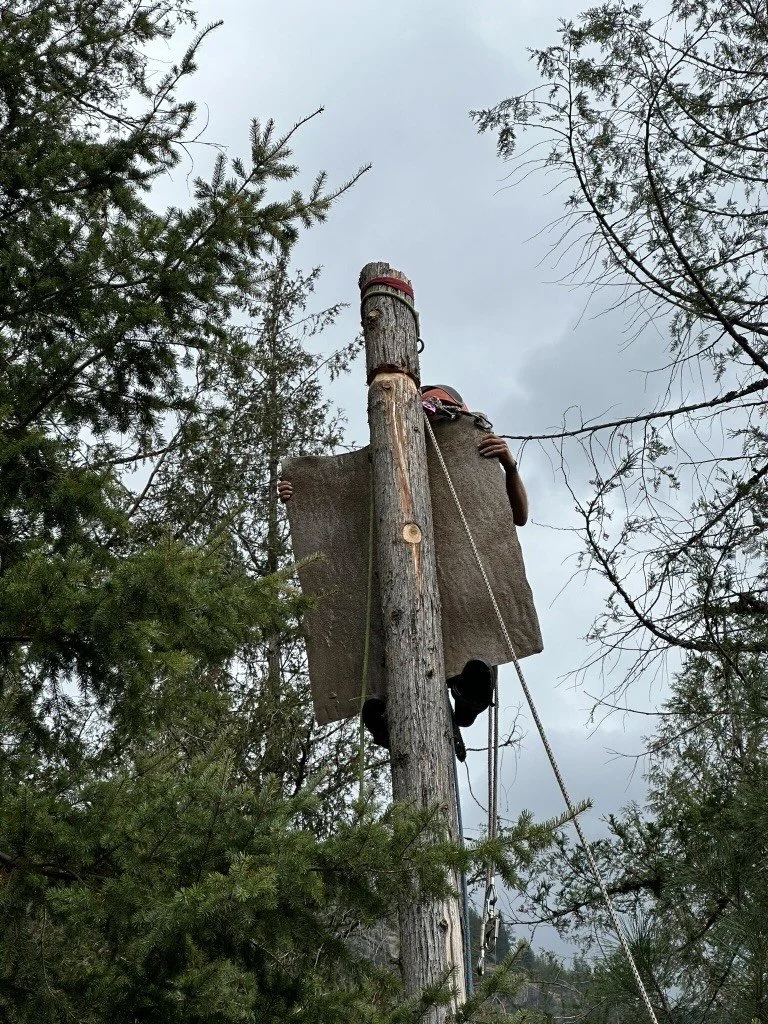
In 2024, along with the Bat Condo we also installed BrandenBark™ and habitat trees in partnership with the Wildlife Conservation of Canada. BrandenBark™ is an artificial bark bat roost specifically designed for use by bark roosting bats. Dying trees were modified with specific cuts to mimic lightning strikes and crevices were hollowed out to attract and provide additional roosting spaces on-farm.
Bats play an integral role in our eco system, and safe habitats are becoming increasingly hard for them to find.
Through projects like the Bat Condo, BrandenBark™ and habitat tree enhancement, and by taking part in BC’s Annual Bat Count, ERC helps study bat populations and supports their work as natural insect controllers. This helps keep the ecosystem healthy.